

From 1000 Applications to 10 Top Candidates, Fast and Smarter
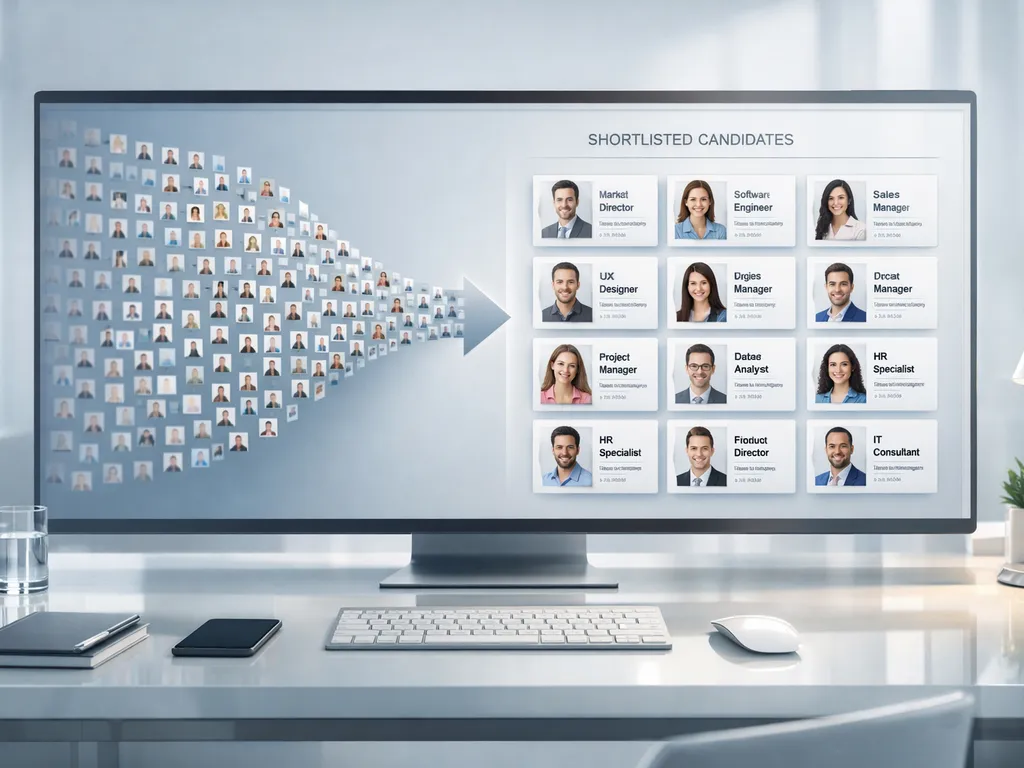
From 1000 applications to 10 top candidates in 60 minutes is not a hiring fantasy. It is what happens when screening stops depending on overloaded recruiters and starts running through a fully automated interview workflow. At Interviewer Screener, we help teams move from 1000 applications to 10 top candidates in 60 minutes by using AI to evaluate every applicant consistently, at scale, and without scheduling bottlenecks.
The real issue is not volume alone. It is what volume does to judgment. When hundreds of resumes land at once, hiring teams default to shortcuts. They scan for familiar employers, fast keywords, polished formatting, or a narrow type of experience that feels safe. Strong candidates disappear in the pile. Weak matches slip through because they look good on paper. From 1000 applications to 10 top candidates in 60 minutes, the challenge is not simply speed. It is preserving decision quality while speed increases.
We built Interviewer Screener for exactly this moment. Our platform fully automates candidate interviews using AI, so every applicant can be screened without human involvement in the first stage. That matters because the first stage is where most hiring systems break. Teams cannot manually interview everyone. So they interview too few, too late, with too little consistency. From 1000 applications to 10 top candidates in 60 minutes becomes possible when every candidate gets the same structured evaluation and every hiring manager receives a ranked shortlist grounded in job-relevant evidence.
Why From 1000 Applications to 10 Top Candidates in 60 Minutes Matters
High-volume hiring creates a strange contradiction. Companies want fairness, speed, and quality at the same time, but traditional screening forces tradeoffs. If you want quality, you slow down. If you want speed, you skim. If you want fairness, you need structure, but structure takes time that most recruiting teams do not have.
From 1000 applications to 10 top candidates in 60 minutes resolves that contradiction by changing the unit of work. Instead of asking recruiters to review and compare massive stacks of resumes, the system runs the same interview logic across all applicants, captures comparable responses, scores against role criteria, and surfaces the strongest matches. The workload shifts from manual filtering to informed decision-making.
For HR leaders, that means less operational drag. For hiring managers, it means better candidate slates. For candidates, it means a real chance to be assessed on substance instead of on whether their resume happened to fit a fast visual scan.
What Actually Happens Between 1000 Applications and 10 Top Candidates
There is a tendency to treat screening like a black box. Applications go in. A shortlist comes out. But if you want confidence in the shortlist, the screening process has to be transparent and role-specific. At Interviewer Screener, from 1000 applications to 10 top candidates in 60 minutes is achieved through a sequence that is structured, repeatable, and aligned to the job.
Step one is role calibration, not resume roulette
Before screening begins, the role has to be translated into measurable criteria. Not vague preferences. Not wish lists. Real indicators of success. A customer support role may need composure, clarity, policy judgment, and written precision. A sales development role may need objection handling, pacing, coachability, and communication energy. A technical operations role may need troubleshooting logic and process discipline.
Our system uses those criteria to design the interview flow. That is why from 1000 applications to 10 top candidates in 60 minutes does not mean rushing past nuance. It means building nuance into the automation itself.
Step two is automated interviewing at full scale
Once the role is configured, every candidate can complete the AI interview without waiting for a recruiter to schedule, host, or score it. This removes the biggest bottleneck in early-stage hiring. Instead of screening a tiny sample of applicants because calendars are full, teams can evaluate the entire pool.
This is where the promise of from 1000 applications to 10 top candidates in 60 minutes becomes real. Screening no longer depends on recruiter capacity. The platform can interview all qualified applicants in parallel, gather consistent response data, and prepare a ranked view for the hiring team.
Step three is evidence-based scoring
Not every answer matters equally. Not every signal should carry the same weight. Screening quality depends on scoring logic that reflects the role. A candidate applying for a frontline service role should not be ranked primarily on resume polish. A candidate for an analytical role should not be rewarded for sounding confident without showing reasoning.
We score candidate interviews against job-relevant dimensions so the shortlist reflects actual fit, not just surface impressions. From 1000 applications to 10 top candidates in 60 minutes works because the platform does the hard comparison work at scale, using consistent standards across every applicant.
Step four is shortlist delivery that managers can trust
A shortlist only saves time if hiring teams believe in it. That means the top 10 cannot feel random or unexplained. Our approach gives teams structured candidate summaries, comparable scoring, and interview evidence they can review quickly. The result is not a mysterious ranking. It is a clear view of why these 10 rose to the top.
The Hidden Cost of Manual Screening
Manual screening often looks cheaper than it is because the cost hides inside recruiter hours, delayed hiring, dropped candidates, and uneven judgment. Most teams feel the pain but cannot isolate it. They just know roles stay open too long and recruiters spend days on work that never feels finished.
From 1000 applications to 10 top candidates in 60 minutes changes the economics of hiring. Instead of paying for repetitive triage with recruiter time, organizations automate the repetitive stage and reserve human attention for final decisions, stakeholder alignment, and candidate close.
Consider a realistic scenario. A company launches a high-demand operations role and receives 1000 applications in three days. The recruiting team has two options. Option one, manually skim resumes and call the most obvious 25. Option two, use Interviewer Screener and move from 1000 applications to 10 top candidates in 60 minutes based on structured interview performance. In the first path, hidden talent gets buried. In the second, the team sees the field much more clearly.
- Manual screening rewards speed over depth when volume spikes
- Resume review creates inconsistent standards across recruiters
- Scheduling live screens slows momentum and increases candidate drop-off
- Top candidates are often lost while teams work through the queue
- Hiring managers receive weaker shortlists because the sample was too small
How AI Reduces Bias Without Slowing the Process
Bias in screening rarely announces itself. It enters quietly through familiarity, fatigue, inconsistency, and personal preference. One recruiter may favor direct industry experience. Another may respond to confidence, elite employers, or polished language. Under pressure, subjective judgment becomes even more variable.
From 1000 applications to 10 top candidates in 60 minutes should not mean compressing bias into a faster process. It should mean replacing subjective first-pass filtering with structured evaluation. That is one of the clearest advantages of automated interviews. Every candidate gets the same core questions, the same scoring framework, and the same opportunity to demonstrate fit.
We have seen how this changes the quality of talent pipelines. Candidates who may have been ignored for nontraditional backgrounds can perform strongly when given a direct chance to respond to relevant scenarios. At the same time, candidates with impressive resumes but weak role fit no longer coast through on brand-name experience alone. From 1000 applications to 10 top candidates in 60 minutes becomes more than a productivity gain. It becomes a fairness upgrade tied to business outcomes.
From 1000 Applications to 10 Top Candidates in 60 Minutes for Different Hiring Models
Not all high-volume hiring looks the same. The screening design should adapt to the role, the operating model, and the risk profile of the hire. That flexibility is essential if from 1000 applications to 10 top candidates in 60 minutes is going to produce useful results across departments.
Hourly and frontline hiring
These roles often attract large applicant pools and need fast fill times. The biggest challenge is not finding applicants. It is identifying who can actually perform under real-world conditions. In this context, automated screening can focus on availability, communication, reliability signals, policy judgment, and service mindset.
A retailer opening a new location may receive a flood of applications overnight. From 1000 applications to 10 top candidates in 60 minutes allows the team to move immediately, before strong candidates accept other offers elsewhere.
Professional and mid-market hiring
These roles demand a deeper read on reasoning, stakeholder communication, and role-specific judgment. Here, the AI interview can surface stronger differentiation than resumes alone. Candidates can be assessed on scenario responses, decision logic, prioritization, and clarity under pressure.
This is where from 1000 applications to 10 top candidates in 60 minutes saves not only time, but managerial energy. Hiring leaders stop sitting through weak first-round calls and start with candidates who have already demonstrated substance.
Distributed and remote hiring
Remote hiring raises the stakes for asynchronous, consistent screening. Time zones complicate scheduling. Applicant volumes expand. Teams need a process that works globally without losing control. Automated interviewing is especially effective here because every candidate can be assessed promptly, regardless of geography.
From 1000 applications to 10 top candidates in 60 minutes gives distributed teams a way to standardize screening without building a giant coordination layer around it.

What Hiring Teams Gain Beyond Speed
The headline benefit is obvious. From 1000 applications to 10 top candidates in 60 minutes is dramatically faster than traditional screening. But speed is only part of the value. The deeper gains show up in consistency, visibility, and strategic focus.
Recruiters stop drowning in repetitive tasks. Hiring managers stop reviewing weak candidates. Talent leaders gain a screening system that can scale during spikes without collapsing under demand. Because Interviewer Screener fully automates candidate interviews using AI, teams can maintain high screening coverage even when application volume surges unexpectedly.
There is also a stronger audit trail for decision quality. When a top candidate is selected, the reasons are easier to trace. When a hiring manager asks why someone ranked highly, there is interview evidence to review. From 1000 applications to 10 top candidates in 60 minutes feels less risky when the shortlist is supported by structured signals rather than guesswork.
The Candidate Experience Is Better Than Most Teams Expect
Some leaders worry that automation will feel cold. In practice, the opposite is often true when the system is well designed. Candidates usually prefer a prompt, clear, accessible screening process over waiting days for a rushed recruiter call that may never happen.
From 1000 applications to 10 top candidates in 60 minutes improves the candidate experience because it creates responsiveness at scale. Applicants move forward quickly. They receive a real chance to demonstrate fit. They are not reduced to a few resume bullets interpreted in haste.
Imagine a candidate changing industries. On paper, they may look unconventional. In a traditional process, they are likely screened out. In an automated interview built around transferable skills and scenario judgment, they can show exactly how they think and communicate. That is a better experience and, often, a better hire.
Where Implementation Succeeds or Fails
Technology alone does not guarantee outcomes. The difference between a strong automated screening program and a weak one usually comes down to setup discipline. If the role criteria are vague, the shortlist will be vague. If the interview prompts do not reflect actual performance needs, the ranking will miss.
That is why we treat implementation as operational design, not just software deployment. From 1000 applications to 10 top candidates in 60 minutes works best when the team aligns on what great performance looks like, which traits matter early, and what evidence should separate a top candidate from an average one.
We also advise teams to resist overengineering. The goal is not to measure everything. The goal is to measure what predicts early success in the role. A focused screening design consistently beats a bloated one.
- Define no more than a handful of core success criteria for the role
- Use interview questions that mirror real situations candidates will face
- Score for evidence, not style alone
- Review the top-ranked candidates for pattern quality, not just score order
- Refine the workflow as hiring teams learn what top performers have in common
From 1000 Applications to 10 Top Candidates in 60 Minutes Is a Leadership Decision
This shift is not just about recruiting operations. It is about how a company chooses to make talent decisions under pressure. Leaders can keep relying on manual methods that were built for lower volume and slower markets, or they can adopt a system designed for modern hiring reality.
From 1000 applications to 10 top candidates in 60 minutes signals something important to the business. It says hiring will be handled with rigor, speed, and consistency. It says recruiter capacity will be used where judgment matters most. It says candidate evaluation will be broader than a resume skim and faster than a scheduling backlog.
At Interviewer Screener, we see this as a practical advantage, not a theoretical one. Teams that automate the first interview layer create more room for better human decisions later. That is the point. Automation should not remove judgment. It should protect judgment from being wasted on repetitive screening work.
The Real Takeaway
From 1000 applications to 10 top candidates in 60 minutes is not about doing the old process faster. It is about replacing a fragile process with one built for scale. When AI fully automates candidate interviews, hiring teams can screen everyone, compare candidates consistently, reduce bias from first-pass review, and deliver stronger shortlists without exhausting recruiters.
For HR professionals and tech decision-makers, the takeaway is simple. If your team is still trying to manage high-volume hiring through manual resume review and scattered phone screens, you are limiting both speed and quality. From 1000 applications to 10 top candidates in 60 minutes is achievable when screening is structured, automated, and tied to the real demands of the role.
That is exactly what we built Interviewer Screener to do. From 1000 applications to 10 top candidates in 60 minutes, with no human involvement in the screening stage, is how modern hiring gets sharper.
Frequently Asked Questions
How does Interviewer Screener get from 1000 applications to 10 top candidates in 60 minutes?
Interviewer Screener automates the interview stage for every applicant, scores responses against role-specific criteria, and ranks candidates based on structured evidence. From 1000 applications to 10 top candidates in 60 minutes becomes possible because the system runs interviews in parallel instead of relying on recruiter availability.
Does from 1000 applications to 10 top candidates in 60 minutes sacrifice quality?
Not when the process is designed correctly. Quality improves when all candidates are assessed using the same role-relevant interview framework. From 1000 applications to 10 top candidates in 60 minutes works because it replaces rushed resume filtering with consistent evaluation.
Is this approach only for high-volume hourly hiring?
No. From 1000 applications to 10 top candidates in 60 minutes is valuable anywhere applicant volume exceeds recruiter capacity. That includes frontline roles, professional roles, distributed teams, and fast-growing companies that need a dependable first-round screening process.
How does automated screening help reduce bias?
Automated screening gives every candidate the same initial interview structure and scoring logic. That reduces the variability that comes from subjective resume review, recruiter fatigue, and inconsistent first-round calls. From 1000 applications to 10 top candidates in 60 minutes becomes fairer when assessment is standardized.
What should teams prepare before launching an automated interview workflow?
Teams should define the core success criteria for the role, decide which signals matter most in early screening, and align on what a strong shortlist should show. The more clearly the role is calibrated, the more effectively Interviewer Screener can move from 1000 applications to 10 top candidates in 60 minutes.