
AI in Hiring Process: How We Use Automation to Screen Candidates Faster and Better
AI in hiring process means using automated intelligence to handle screening with speed, consistency, and structure. We use it to remove manual interview scheduling, reduce screening delays, and assess every applicant through the same job-relevant framework. For HR teams under pressure to hire at scale, AI in hiring process changes screening from a bottleneck into a reliable system.
Most hiring teams do not struggle because they lack applicants. They struggle because the early stages of evaluation consume too much time, introduce inconsistency, and make it hard to compare candidates fairly. Resumes pile up. Recruiters repeat the same questions. Interview notes vary by reviewer. Strong candidates wait too long. Weak matches move too far. This is where AI in hiring process creates measurable operational value.
At Interview Screener, we see AI in hiring process as more than workflow support. It is a way to fully automate candidate interviews without human involvement in the screening stage. That distinction matters. Instead of asking recruiters to manually coordinate first-round calls, we allow companies to run structured, role-specific AI interviews that evaluate every candidate against the same criteria, every time.
Why AI in Hiring Process Matters More at the Screening Stage
The screening stage shapes everything that follows. If screening is slow, the whole funnel slows down. If screening is inconsistent, bias increases and hiring confidence drops. If screening is shallow, later interviews become expensive cleanup work. We focus on AI in hiring process at this stage because it is the point where time, fairness, and scalability collide.
Traditional screening often depends on recruiter bandwidth. That creates natural variation. One candidate may get a thoughtful phone screen. Another may get a rushed conversation. A third may only be judged on a resume. AI in hiring process brings standardization to this early decision point, which helps hiring teams compare people on evidence instead of fragmented impressions.
- It shortens time to first evaluation.
- It applies the same interview structure to every applicant.
- It reduces repetitive manual work for recruiting teams.
- It creates cleaner candidate data for downstream decisions.
- It helps teams handle hiring spikes without adding screening headcount.
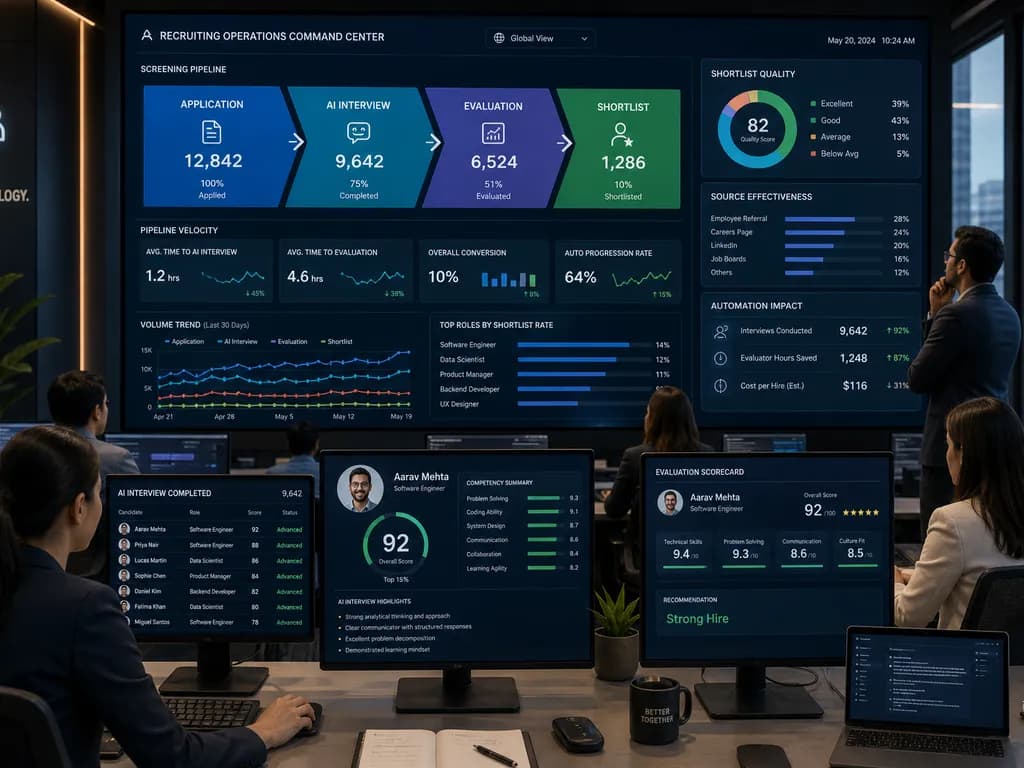
How We Apply AI in Hiring Process Without Human Screening Calls
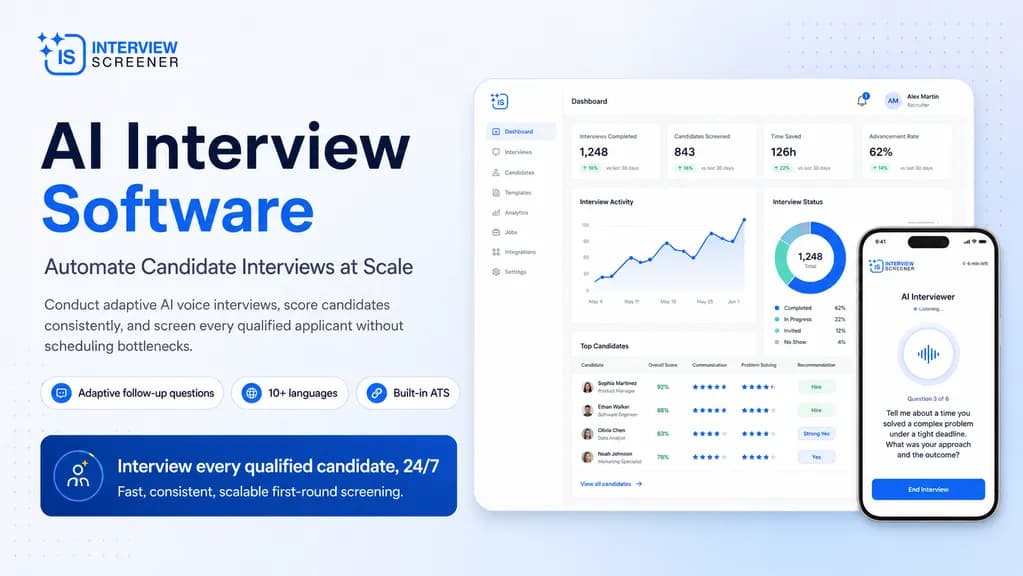
Our approach to AI in hiring process is direct. We automate the interview itself. Candidates complete an AI-led screening interview built around the role, required competencies, and decision criteria defined by the employer. This replaces the need for a human-conducted first-round interview while preserving structure, depth, and consistency.
That matters because many companies say they use AI in hiring process when they really mean resume parsing, scheduling help, or note-taking. Those tools can improve efficiency, but they do not remove the core screening burden. We do. By automating candidate interviews end to end, we help hiring teams stop spending valuable time on repetitive qualification calls.
The result is not just faster screening. It is better screening discipline. Every candidate is asked relevant questions. Every answer is evaluated within the same framework. Every hiring team receives organized outputs that support clearer decisions.
What a strong AI in Hiring Process workflow includes
- Role-specific interview design tied to hiring criteria
- Consistent questioning across all candidates
- Automated collection of candidate responses
- Structured scoring against defined competencies
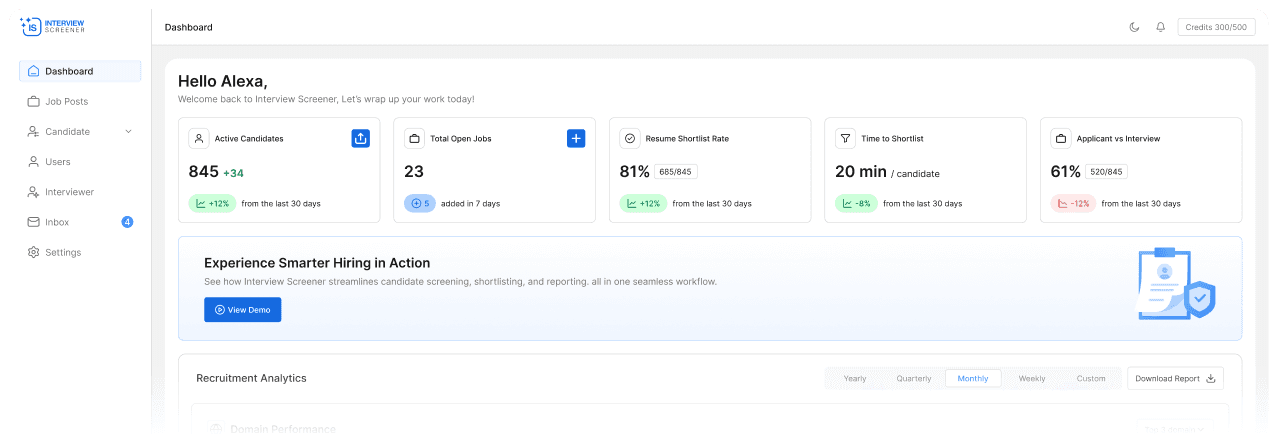
- Clear summaries for recruiter and hiring manager review
- A shortlist process based on evidence, not memory
The Real HR Problems AI in Hiring Process Solves
HR leaders rarely ask for innovation for its own sake. They ask for control. They want fewer delays, better signal, and less administrative drag. AI in hiring process solves practical problems that appear every day inside recruiting teams.
Time pressure
Screening calls are deceptively expensive. A short call still requires scheduling, preparation, note-taking, follow-up, and handoff. Multiply that by dozens or hundreds of applicants, and the time cost becomes obvious. AI in hiring process removes that repetitive load so recruiters can focus on calibration, stakeholder alignment, and candidate experience at later stages.
Scaling without chaos
Growth hiring, seasonal hiring, and multi-role hiring all expose the limits of manual screening. Teams cannot easily scale first-round interviews at the pace applications arrive. AI in hiring process lets companies process volume without sacrificing structure. That is the difference between a busy recruiting team and a controlled recruiting operation.
Bias and inconsistency
Human screeners do their best, but variation is unavoidable. Tone, energy, assumptions, and time pressure can all affect how a conversation unfolds. AI in hiring process supports more consistent evaluation by standardizing the interview experience and aligning scoring to predefined criteria. That consistency helps teams reduce noise and improve defensibility.
Weak decision data
Many first-round interviews produce vague notes and broad impressions. That creates friction later when hiring managers want evidence. AI in hiring process improves this by generating structured outputs from each screening interview. Instead of relying on scattered comments, teams can review comparable information across the candidate pool.
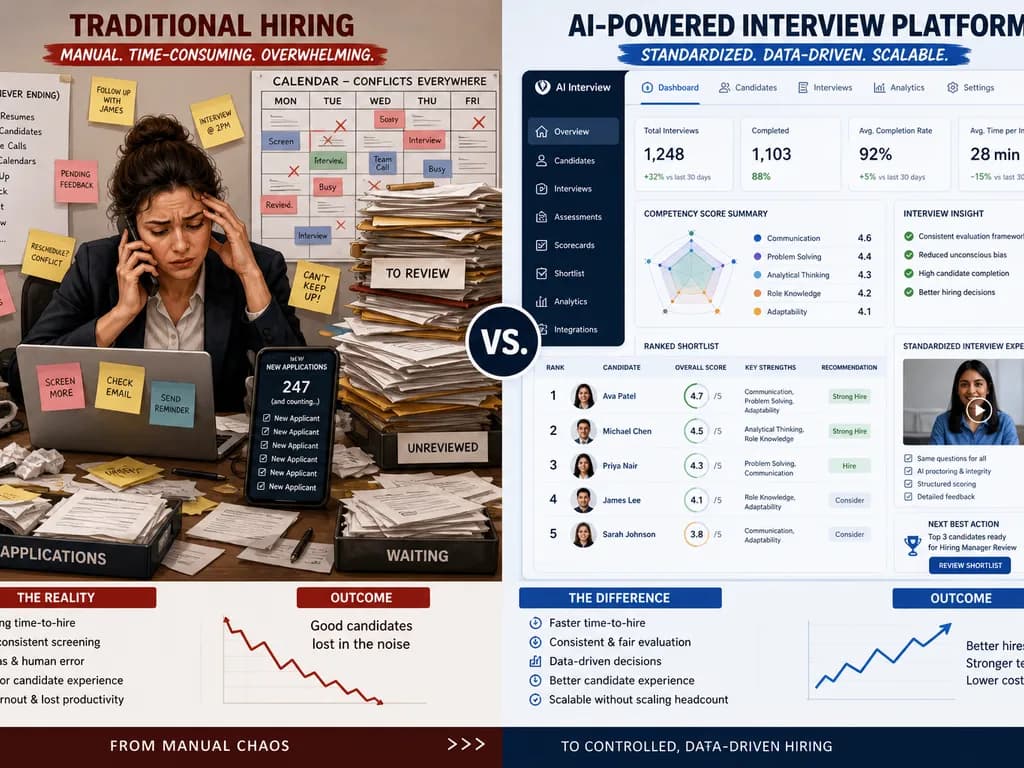
Where AI in Hiring Process Delivers the Strongest Business Impact
The highest impact comes when screening volume is high, roles are repeatable, and hiring teams need fast decisions without sacrificing quality. In these environments, AI in hiring process improves throughput while preserving rigor.
We often see the strongest outcomes in roles where employers need to assess communication, job readiness, motivation, and baseline competency before involving managers. AI in hiring process is especially effective when companies want every applicant to have a fair chance to respond to the same questions instead of being filtered by recruiter availability.
- High-volume hiring where manual phone screens create delays
- Multi-location recruiting where consistency matters across teams
- Lean TA functions that need more output without more headcount
- Roles requiring structured first-round qualification before manager review
- Hiring environments where speed to shortlist affects offer acceptance
What to Watch Out for When Using AI in Hiring Process
Not every implementation of AI in hiring process creates value. Some add complexity without removing work. Others produce surface-level automation that still leaves recruiters doing manual interviews. The key is to evaluate whether the system genuinely replaces low-value screening tasks while improving consistency and decision quality.
We advise hiring teams to look for clarity in four areas. First, does the system apply structured interview logic aligned to the role? Second, does it fully automate candidate screening interviews instead of merely assisting a recruiter? Third, does it produce usable outputs for decision-making? Fourth, does it fit naturally into recruiting operations instead of forcing extra admin work?
AI in hiring process should not become another layer between applicants and decisions. It should simplify the path from application to shortlist. When designed well, it does exactly that.
How We Think About Candidate Experience in AI in Hiring Process
A common concern is whether automation makes hiring feel impersonal. Our view is simple. Candidates care about fairness, clarity, and speed. A slow, inconsistent screening process feels far more frustrating than a structured AI interview that happens quickly and evaluates everyone the same way.
Done properly, AI in hiring process can improve candidate experience by reducing waiting time, removing scheduling friction, and making the first evaluation more predictable. Candidates know they will be assessed against relevant criteria. Employers get a stronger basis for comparison. Everyone moves faster.
That is why we believe AI in hiring process works best when it is purposeful. It should ask better questions, create cleaner signal, and eliminate repetitive steps that do not serve candidates or employers.
The Future of AI in Hiring Process Is Full Screening Automation
The next phase of hiring is not partial assistance. It is full automation of the repetitive interview layer that slows down recruiting teams today. We see AI in hiring process moving from support tool to operational engine, especially in the earliest stage of candidate evaluation.
For HR and talent teams, the opportunity is clear. Replace manual first-round interviews with structured AI-led screening. Gain speed without losing rigor. Create consistency without overloading recruiters. Build a shortlist from evidence, not scattered impressions. This is the practical promise of AI in hiring process, and it is already reshaping how efficient teams hire.
FAQ
What is AI in hiring process?
AI in hiring process is the use of automated intelligence to support or execute parts of recruiting. In our model, it means fully automating candidate screening interviews so employers can evaluate applicants faster and more consistently.
How does AI in hiring process reduce recruiter workload?
AI in hiring process reduces workload by removing repetitive first-round interviews, minimizing scheduling coordination, and producing structured candidate evaluations that are easier to review and compare.
Can AI in hiring process help reduce bias?
AI in hiring process can support more consistent evaluation by asking the same role-relevant questions to every candidate and aligning scoring to predefined criteria. This helps reduce variation that often appears in manual screening.
Is AI in hiring process only useful for high-volume hiring?
No. High-volume hiring is a strong use case, but AI in hiring process also helps lean teams, distributed recruiting functions, and employers that want more structure in early-stage evaluation.
Why do we believe AI in hiring process is most effective in screening?
We believe AI in hiring process is most effective in screening because that is where repetitive manual effort, inconsistency, and delays are most concentrated. Automating this stage creates immediate gains in speed, fairness, and recruiter capacity.