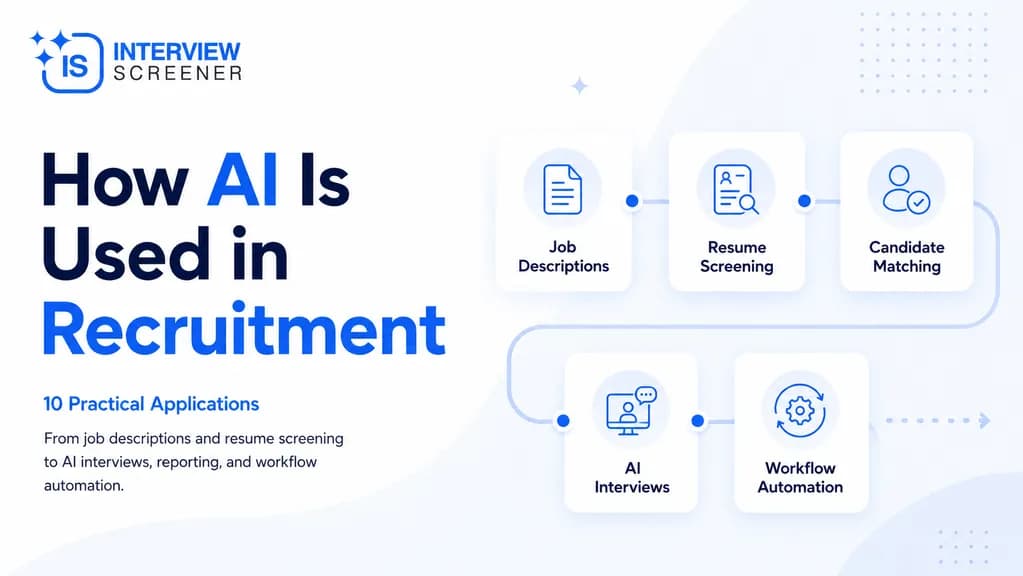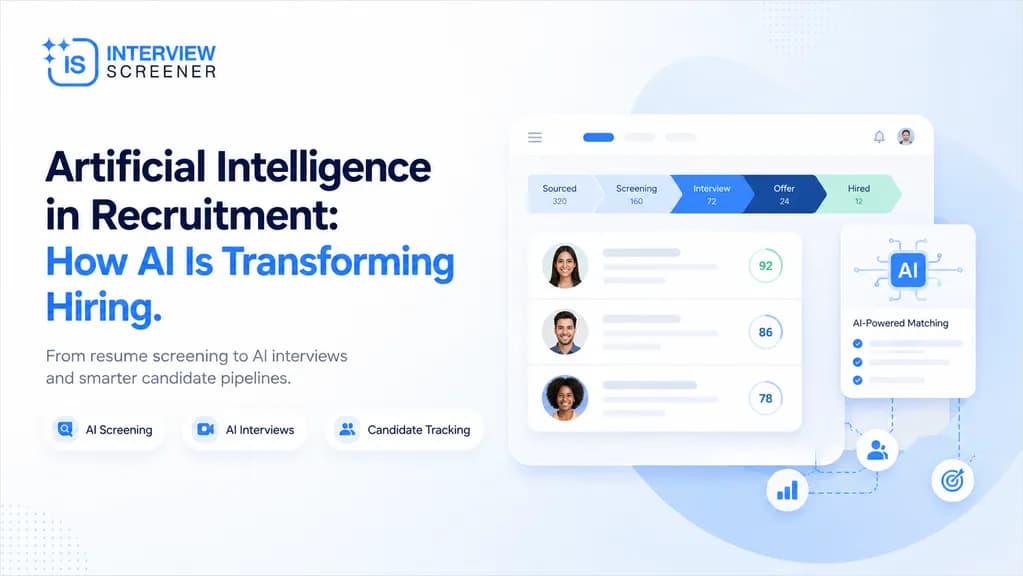
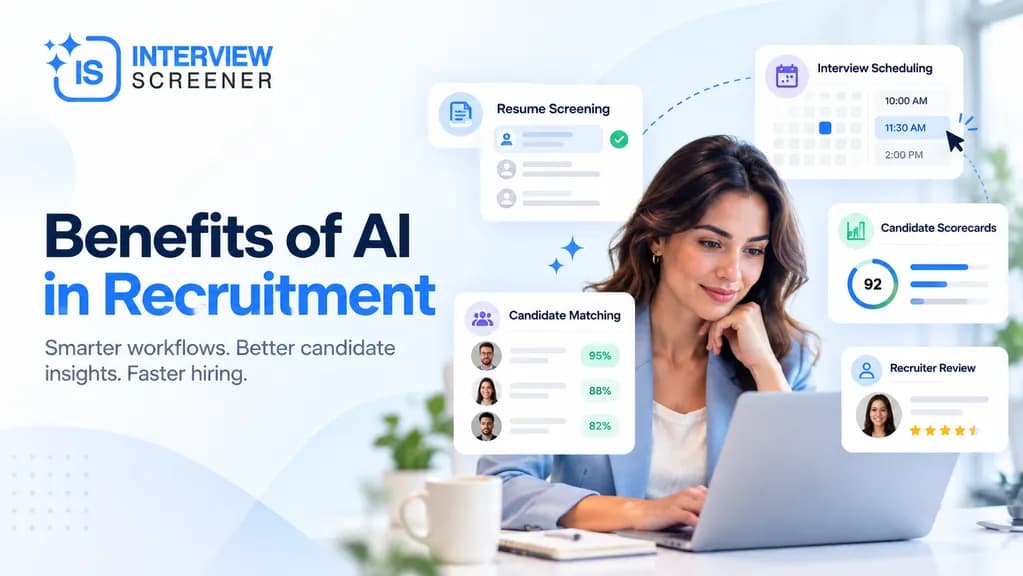
Recruiters are expected to move quickly, keep applicants informed and give hiring managers enough evidence to make confident decisions. That becomes difficult when applications increase or several roles open at once.
The benefits of AI in recruitment are clearest in repetitive, high-volume work. AI can organize candidate information, support first-round screening, generate reports and keep routine workflows moving.
SHRMʼs 2025 Talent Trends research found that 43% of organizations used AI for HR activities, up from 26% in 2024. Recruitment was the leading use case, with 51% of organizations using AI in HR applying it to recruiting.
Among recruiters using AI, 89% said it saved time or increased efficiency. Another 36% reported lower hiring-related costs, while 24% said it improved their ability to identify top candidates.
AI works best as a support system. Recruiters should remain responsible for context, candidate relationships, accommodations and final decisions.
For a wider overview, read our guide to artificial intelligence in recruitment.
1. Faster Resume Screening
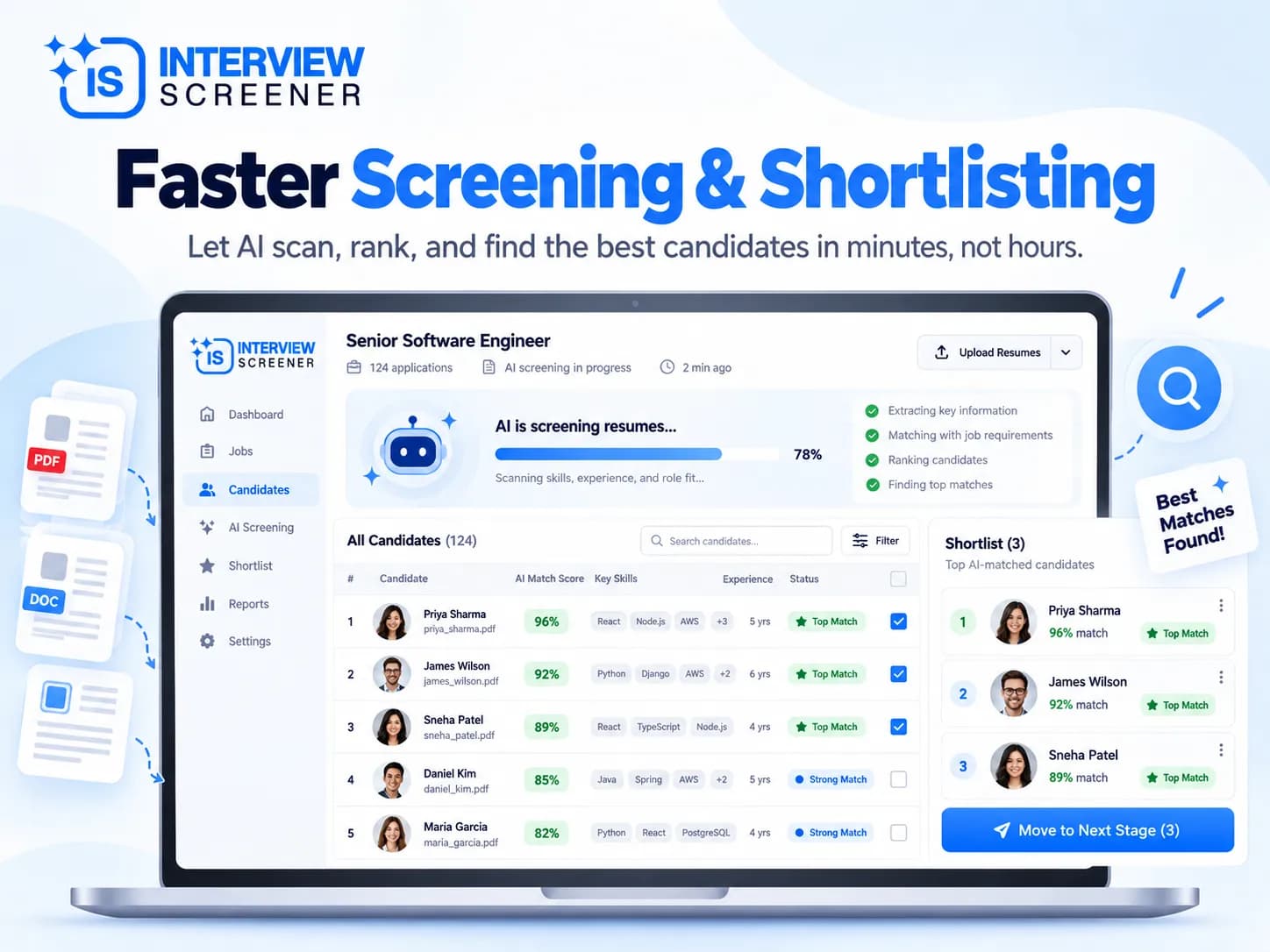
Reading hundreds of applications manually can take days. AI resume screening extracts skills, work history, education and certifications, then compares them with the role requirements. SHRM found that 44% of organizations using AI in recruiting applied it to resume screening.
This helps recruiters identify relevant applicants sooner. The original resume should remain available because automated tools may miss transferable skills or unusual formatting.
2. Greater Recruiting Capacity
Recruiters spend considerable time sorting applications, arranging calls and updating candidate records. Recruitment automation reduces part of this workload.
LinkedInʼs 2025 Future of Recruiting report found that talent professionals using generative AI reported an average 20% reduction in workload, roughly one working day each week.
That time can be redirected toward candidate engagement, difficult searches and hiring-manager alignment.
3. Faster Initial Response
Strong candidates may move on when employers take too long to respond.
AI recruitment tools can process an application as soon as it arrives. They can check basic qualifications, send approved pre-screening questions or invite suitable candidates to the next stage.
This shortens the gap between application and first contact. It also helps recruiters respond more consistently during sudden increases in application volume.
4. More Consistent Evaluation
Unstructured interviews can vary significantly between interviewers. AI-supported screening can use the same core questions, competency definitions and reporting structure for candidates applying to the same role.
Consistency does not automatically prove fairness. The U.S. Equal Employment Opportunity Commissionʼs guidance on AI confirms that employment discrimination laws still apply when AI screens resumes or evaluates recorded interviews.
Criteria must therefore be job-related, explainable and open to human correction.
benefits of AI in recruitment
5. Less Interview Scheduling
Early-stage interviews often require several emails before both sides find a suitable time. Asynchronous AI interviews let candidates complete a structured first-round interview within an approved period without waiting for a recruiter to attend live.
This is useful for international candidates, shift workers and distributed teams. Employers should still provide technical help and an alternative process when needed.
6. Better Recruitment Documentation
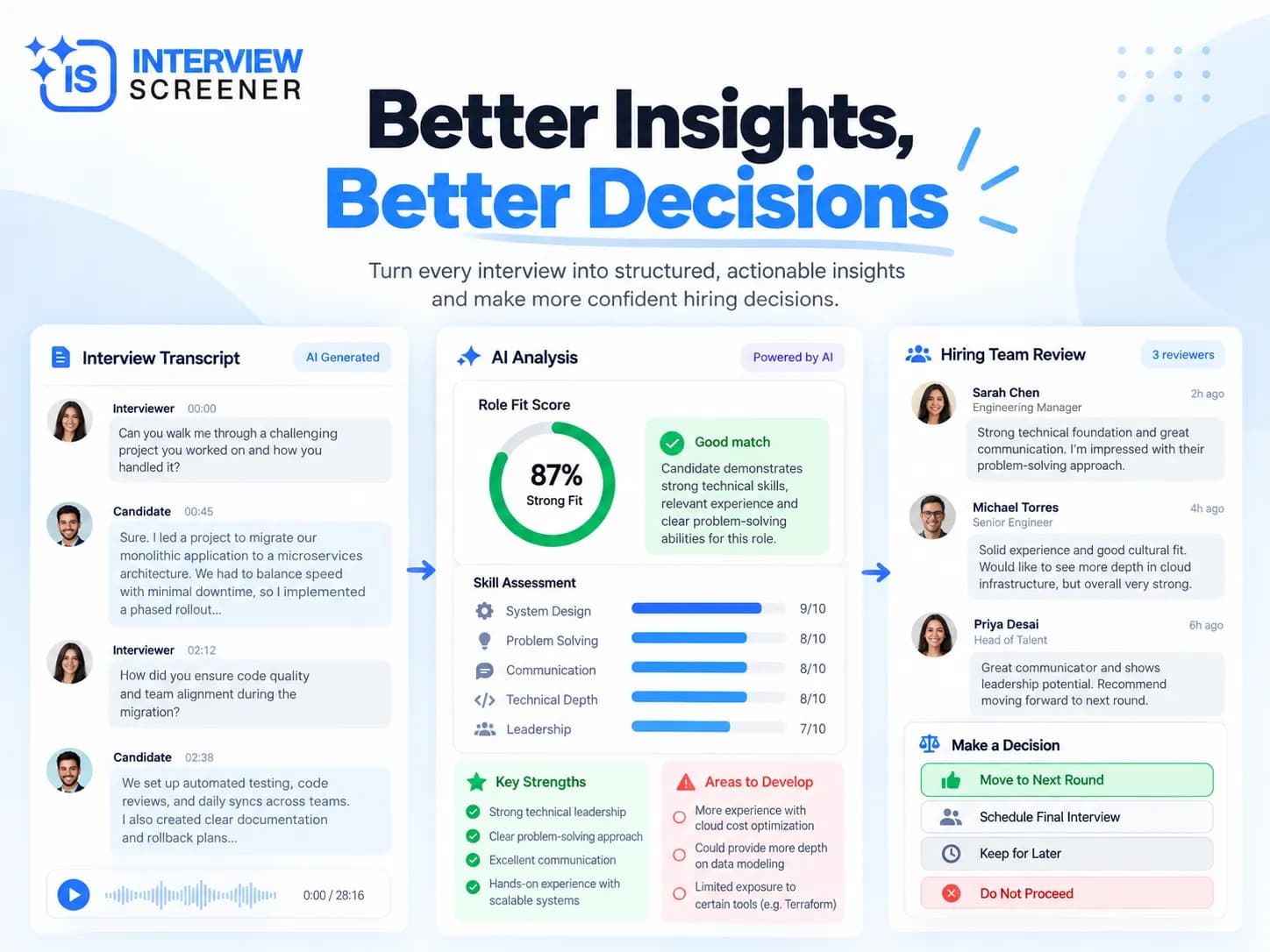
Hiring decisions are difficult to review when evidence is scattered across emails and personal notes. AI recruiting software can produce resume summaries, interview transcripts, competency findings and candidate-status histories.
This gives hiring teams a clearer record of what happened and why a candidate progressed.
Better documentation can also help teams investigate errors, compare decisions and improve interview questions over time.
7. Easier Candidate Comparison
Structured evaluation gives hiring teams a shared evidence base. Recruiters can compare how candidates addressed the same role-related competencies instead of relying only on general impressions.
The comparison should support deeper review rather than reduce a person to a single score.
8. Better Support for High-Volume Hiring
Retail, hospitality, logistics, healthcare support and graduate recruitment may attract hundreds or thousands of applicants. AI hiring tools can organize applications, confirm basic requirements, conduct initial screening and prepare reports in parallel.
The need for scalable recruitment remains significant. SHRM reported that 69% of organizations still experienced difficulty recruiting for full-time roles in 2025.
AI cannot solve every talent shortage, but it can help recruiters manage larger applicant pools.
9. More Responsive Candidate Communication
Long periods of silence create a poor candidate experience. Automated workflows can send confirmations, interview invitations, reminders and status updates without requiring a recruiter to trigger every message.
SHRM found that 29% of organizations using AI in recruitment applied it to applicant communication. Messages should still feel clear, useful and respectful.
10. Multilingual Recruitment Support
Multilingual AI interviews can help employers reach candidates across countries and regions. Interview Screener currently supports AI interviews in 10 languages, along with resume screening, candidate reports and applicant tracking.
Employers should test question quality, transcription accuracy and evaluation consistency in every supported language.
11. Better Recruitment Analytics
AI recruitment platforms can capture structured data throughout the hiring funnel. Teams can monitor application volume, screening completion, candidate drop-off, stage conversion and hiring-manager response time.
LinkedIn found that 89% of talent professionals believed measuring quality of hire would become more important. Only 25% felt highly confident in their organizationʼs ability to measure it, while 61% believed AI could help.
Analytics create visibility, but employers still need clear definitions for hiring success.
benefits of AI in recruitment
12. Lower Administrative Workload and Costs
AI can reduce work that does not always require specialist recruiter judgment, including data extraction, candidate sorting, transcription, reminders and applicant tracking updates.
SHRM found that 36% of respondents using AI for recruiting said it helped reduce recruitment, interviewing or hiring costs.
These are reported experiences, not guaranteed savings. Results depend on hiring volume, software costs and implementation quality.
Benefits for Recruiters, Hiring Managers and Candidates
The benefits of AI in recruitment are shared across the hiring process. Recruiters gain more time for strategic work. Hiring managers receive clearer summaries and better-organized evidence.
Candidates may benefit from faster responses and more flexible interview availability. These advantages disappear when the technology is confusing, inaccessible or poorly monitored.
What AI Recruitment Cannot Fix
AI cannot repair an unclear job description, unrealistic requirements, weak compensation or slow internal approvals.
Automating a broken process may simply make the same problems happen faster. Organizations should improve the underlying workflow before investing in AI recruiting software.
How to Measure the Benefits
Before implementation, establish a baseline for:
- Screening time
- Recruiter hours per vacancy
- Interview scheduling time
- Candidate completion and drop-off
- Time to shortlist
- Candidate feedback
- Recruiter override rates
Accuracy and accessibility should be measured alongside speed and cost.
The NIST AI Risk Management Framework provides a voluntary approach to managing risks throughout the design, deployment and evaluation of AI systems.
Success should reflect whether hiring becomes more useful and reliable, not only how much work is automated.
How Interview Screener Delivers These Benefits
Interview Screener connects early-stage hiring activities in one platform.
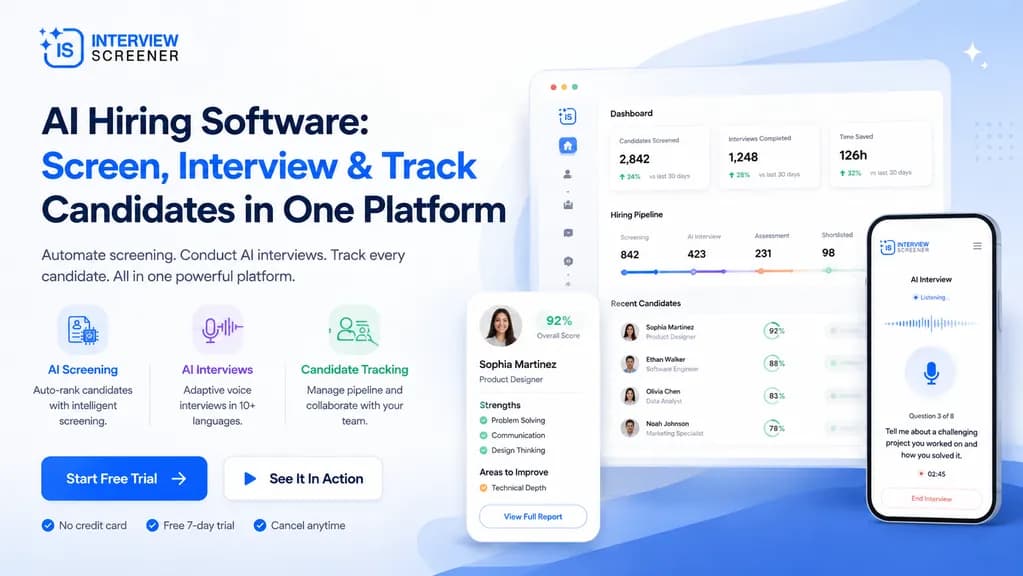
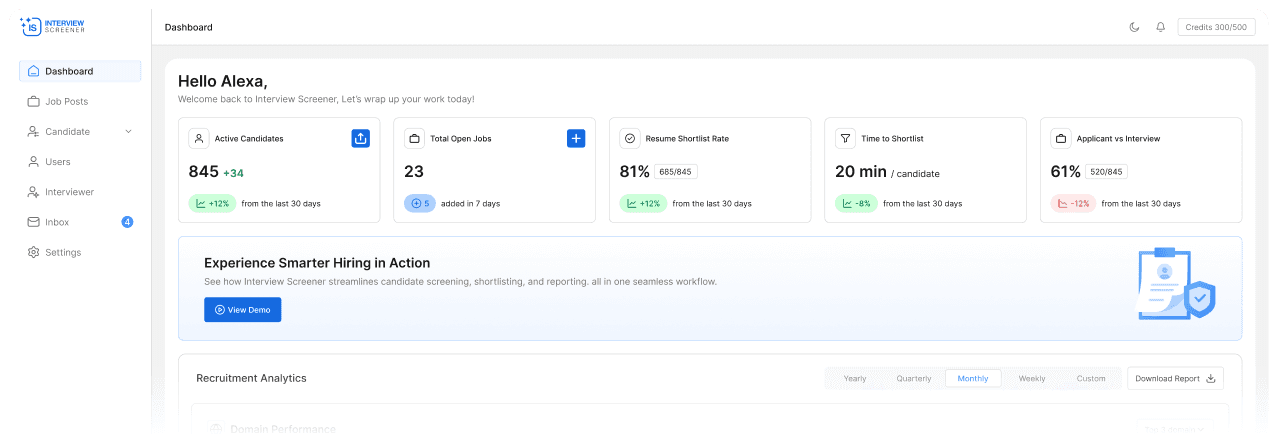
Teams can create roles, screen resumes, define qualification thresholds, conduct structured AI interviews, generate candidate reports and manage applicants through a built-in applicant tracking system.
The goal is to reduce repetitive work and give recruiters organized evidence for human review.
Learn more about how AI is used in recruitment.
Frequently Asked Questions
What are the main benefits of AI in recruitment?
The main advantages include faster screening, greater recruiting capacity, less scheduling work, improved documentation, more consistent evaluation and better recruitment analytics.
Does AI make recruitment faster?
AI can shorten early-stage recruitment by reducing manual resume review, scheduling delays and repetitive follow-up.
Can AI reduce recruitment costs?
AI may reduce the manual time required for repetitive hiring tasks.
Actual savings depend on application volume, software costs and implementation quality.
Is AI recruitment automatically unbiased?
No. AI can apply criteria consistently, but it can also reproduce unfair patterns or introduce errors. Responsible use requires testing, transparency, accessibility and human oversight.
Final Takeaway
The benefits of AI in recruitment are strongest when the technology solves a clear operational problem.
AI can help hiring teams screen candidates faster, increase capacity, reduce scheduling work and improve recruitment documentation.
Those gains come from allowing recruiters to spend less time on repetitive processing and more time on judgment, relationships and accountability.